
It can be frustrating to lose produce and plants to competition from critters in your garden or have the plants you want crowded out by weeds (which my sister refers to as “highly successful plants”). I have several strawberries planted by the prior resident, and the local slugs really enjoyed them last year. I put a shallow pan of beer near the plants, which I’d heard would divert slugs (several did drown themselves in the amber liquid) but every berry I harvested still had tunnels where slugs had dined.

It’s tempting to resort to pesticides, which include insecticides, herbicides, fungicides among others, but they can be dangerous to your health, as exposure to some of them increase your risk for neurological disease, cancer, and hormone disruption.1 Recent studies have demonstrated an increased risk of Parkinson’s disease among people who are occupationally exposed, as well as lower IQs in children born to women exposed to insecticides.2,3
Pesticides can also be harmful to pets and beneficial animals in your garden, such as pollinators. For example, there is an association between pesticide use on lawns and gardens and canine malignant lymphoma.4 Insecticides may be particularly toxic to bees, especially when they’re applied on or near flowering plants.5 Note that even “natural” or “organic” pesticides, like Neem Oil, can be toxic to bees so proceed with caution when using them.6
It’s not just pesticides you spray in your garden that you need to be aware of. Non-organic seeds and plants may be treated with pesticides. I learned that when I bought nonorganic zinnia seeds and found several dead bees on their flowers. According to the Center for Food Safety,7 coated seeds are treated with systemic pesticides which are then absorbed into the plant’s tissues, including their pollen. One treated corn seed can contain enough pesticide to kill more than 80,000 bees and consuming even one treated wheat or canola grain can be fatal to birds.7
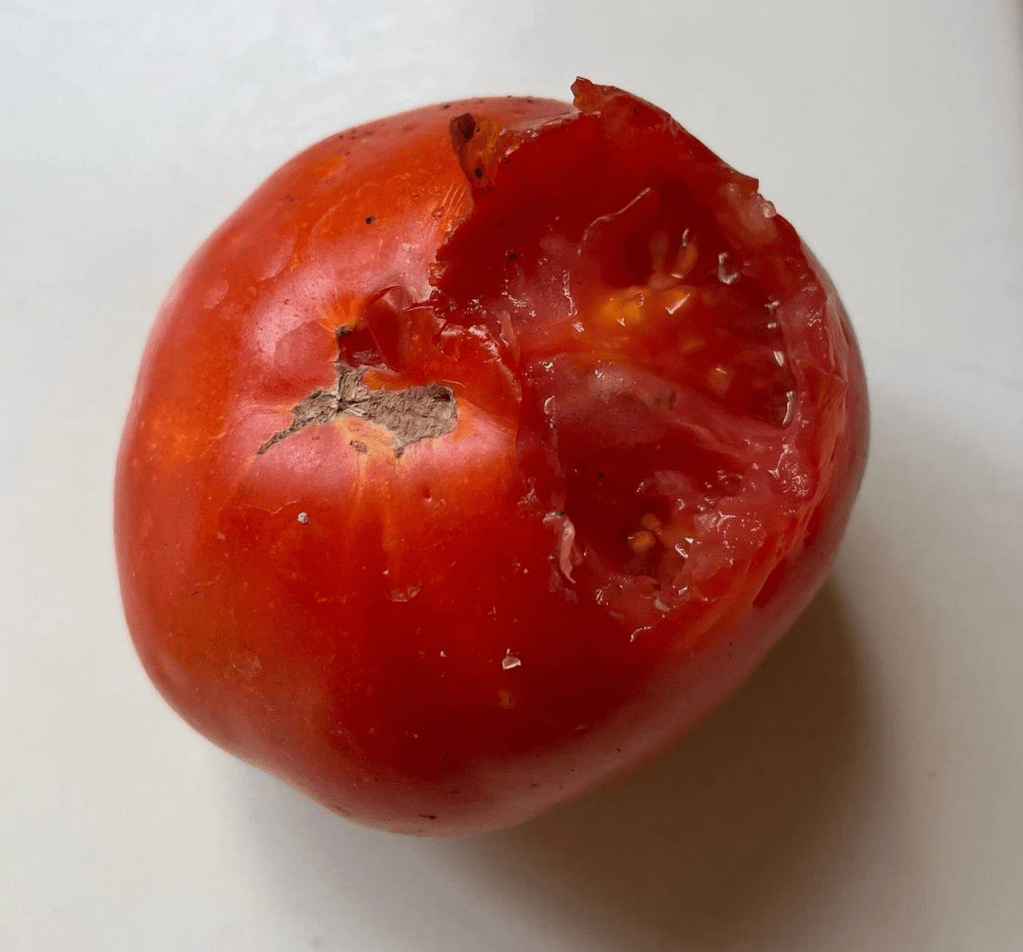
So, what can you do to avoid using toxic pesticides in your garden and still control weeds and bugs or other creatures that share your produce (not sure what critter took such a big bite from my tomato)?
First, buy organic seeds and plants whenever possible. If your local nursery doesn’t stock them, try www.seedsofchange.com, which offers certified organic seeds.
Tips and resources for dealing with pests invading your garden
- Physical barriers can help.
- In the past, I’ve put bark mulch around plants I wanted to protect from slugs.
- This year, I planted strawberries in a hanging planter, hopefully keeping the berries out of reach of slugs though not birds.
- You might also try placing insect barrier netting over your plants when they start fruiting.
- Mulching around plants can reduce weeds.
- Plant these in your garden to repel pests8,9:
- basil, fennel, mint, rosemary, thyme, lavender, feverfew, pennyroyal, lemongrass
- Suggestion for a nontoxic spray to repel pests10:
- 1 part vinegar (white or apple cider) to 3 parts water plus a teaspoon of dish soap (don’t spray directly on the fruit or vegetable part).
- Here are several websites with suggestions for managing your garden to minimize pests:
- Old Farmer’s Almanac: https://www.almanac.com/organic-pesticides
- Xerces Society: https://www.xerces.org/pesticides
- https://www.xerces.org/pesticides
References
- EPA.gov. Human health issues related to pesticides. (downloaded 6/23, 2023)
- Narayan, S. et al. (2017). Occupational pesticide use and parkinson’s disease in the Parkinson Environment Gene (PEG) study. Environ. Int. 107:266-273.
- Bouchard, M. F. et al. (2011). Prenatal exposure to organophosphate pesticides and IQ in 7-year-old children. Environ. Health Perspect. 119:1189-95.
- Takashima-Uebelhoer, B. B. et al. (2012). Household chemical exposures and the risk of canine malignant lymphoma, a model for human non-Hodgkin’s lymphona.
- UC Master Gardener Program of Contra Costa County.
- Xerces Society. The risks of pesticides to pollinators. https://www.xerces.org/pesticides/risks-pesticides-pollinators
- Center for Food Safety, 2023. Pesticide-coated Seeds.
- Harris, L. April 3, 2023. Tips for growing a budget-friendly home garden. EcoWatch.
- Earth 911, May 2, 2023. Peep these nine pest-prevention plants, pronto!
- Whole Harvest, July 27, 2022. How to stop bugs from eating your vegetables.
 Dr. Laurel Standley
One response to “Gardening part 3. From seed to harvest: avoiding pesticides in your garden”
[…] Part 3. From seed to harvest: avoiding pesticides in your garden […]