
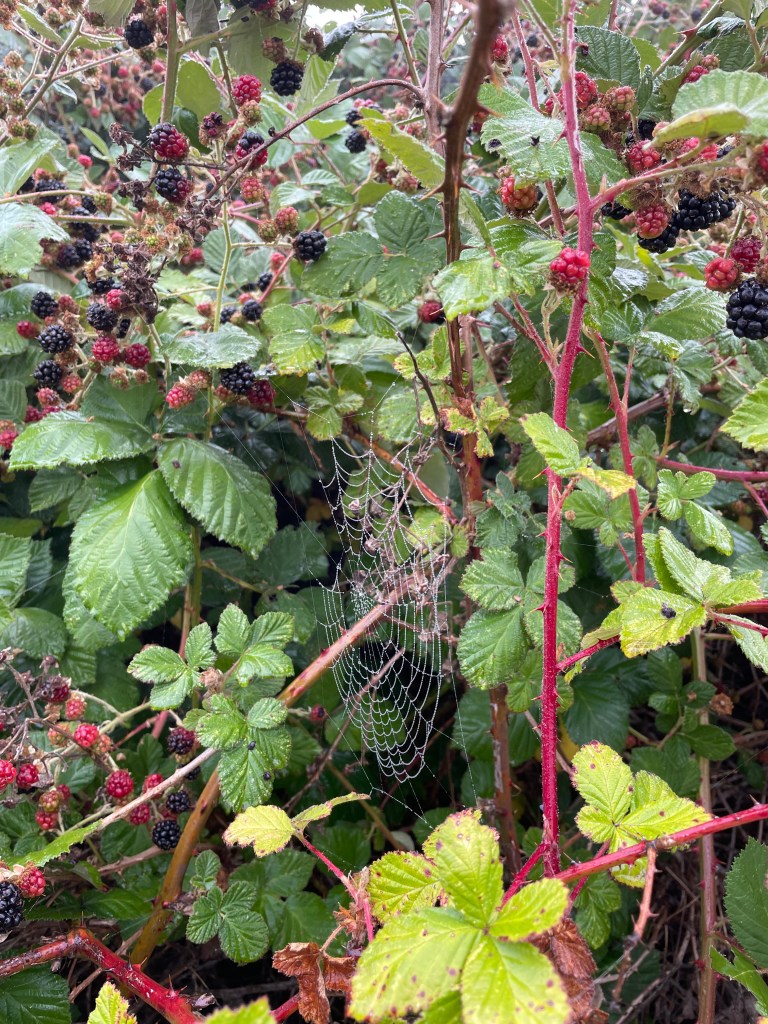
It’s blackberry season in my area, one of my favorite times of the year. There’s nothing like fresh-picked berries over store bought for flavor. In addition to what we grow in our yards, it’s nice to go collecting in the wild. However, there are a few guidelines to follow to make sure you avoid fruits, vegetables, and fungi that may be contaminated by toxic chemicals. Note – this post doesn’t provide information on which plants to avoid because they themselves may be toxic.
As I mentioned in a prior post, proximity to contaminant sources and history of land use where you gather food are important for determining whether it may be contaminated by toxic chemicals.
Location
The further away from airborne sources of contamination you forage, the better, as contaminants are diluted by new air currents or removed from the atmosphere over time and distance either by being washed out in rain, absorbed by vegetation, or dropped out via particles.
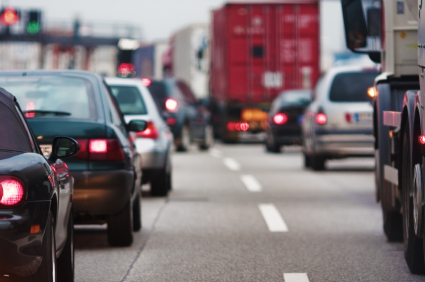
One commonly foraged area for blackberries is along roadsides, where stands of the prolific vines thrive. However, fruit or other plants collected from these areas can be contaminated by vehicular exhaust, as well as toxic metals and plastic particles from engine and tire wear. Runoff of particles from asphalt roads can also contaminate nearby plants, groundwater, and soils. In addition to heavily traveled roads, other locations to avoid include railroad routes and commercial properties where diesel trucks idle. Municipalities may also apply pesticides for weed control along roadways and railroad tracks. Check with your local government to see where and when they spray.
Other areas to avoid include:
- Areas adjacent to agricultural fields where pesticides are applied, particularly through aerial spraying. This includes pesticide spraying by neighbors or homeowners’ associations.
- Flight paths of airports, including those serving small planes, which still use leaded gasoline as fuel.1
- Downwind of industrial sources and incinerators. Check the EPA’s Toxics Release Inventory to see what’s located upwind of the area where you’d like to go foraging.
The best locations for avoiding vegetation contaminated by airborne toxic chemicals are those near or within heavily forested areas, since trees do a great job filtering contaminants.2,3 Just make sure the area isn’t treated with pesticides to manage pests.
Land use
Past and present land use determines whether there are contaminants in the soil and groundwater that can contaminate the vegetation you’re collecting. For example, a field may have once been used for agricultural or industrial purposes and have toxic residues remaining from those activities. Examples include orchards treated with lead-arsenate, or industrial facilities that left PCBs or mercury in the soil.
The safest places to harvest are areas that have been wild for some time, such as mature forests. Even with those, it’s a good idea to make sure they aren’t managed using pesticides or amended with biosolids, which can contain heavy metals, pharmaceuticals, micro- and nano-plastics, and other toxic materials.
It can be challenging to figure out an area’s history but talking to your municipality to see if they have records of the area’s history and management is the best bet. It’s good to know how long the land has been free from industrial or agricultural uses. The longer the better, though some contaminants like PCBs and heavy metals can persist a long time, e.g. decades. Water soluble contaminants are cleared more quickly.
Can washing fruits and vegetables remove toxic chemicals?
Plants can be exposed to contaminants via the atmosphere, groundwater, and/or soil. Depending on the nature of the chemical, it will remain on the surface or be translocated (e.g. move through roots and stalks) into the internal portions of the plant you’re harvesting.4,5
Older, water-insoluble contaminants, such as PCBs and dioxins, are most likely to remain adsorbed to plant surfaces such as the roots. That matters if you’re collecting tubers or other below-ground parts of plants. But more water-soluble contaminants, like current-use pesticides and the heavy metal arsenic, can be translocated into leaves and fruits and vegetables.
Though some surface contaminants can be washed off, a recent study demonstrated that pesticides penetrated the apple peel and were measured on the surface of the pulp to ~30µm depth.6 Thus, washing is unlikely to remove all those residues, and you’ll need to peel produce if they’ve been sprayed with pesticides.
Neither washing nor peeling will remove chemicals that have translocated into the internal flesh of the produce. So, it’s still best to avoid places with sources of contamination when foraging.
Bottom line for safer foraging:
- Gather away from roads, railroad tracks, and flight paths of airports.
- Choose natural areas, especially forested, over urban and agricultural.
- When in doubt, check with authorities on the history and current management of the area.
References
- Miranda, M. L. et al. 2011. A geospatial analysis of the effects of aviation gasoline on childhood blood levels. Environ. Health Perspect. 119:1513-16.
- Nature Conservancy, October 9, 2020. 6 ways trees benefit all of us.
- Nowak, D. J. et al. 2014. Tree and forest effects on air quality and human health in the United States. Environ. Poll. 193:119-129.
- Limmer, M. A., Burken, J. G. 2014. Plant translocation organic compounds: Molecular and physicochemical predictors. Environ. Sci. Technol. Lett.1: 156-161.
- Alengebawy, A. et al. 2021. Heavy metals and pesticides toxicity in agricultural soil and plants: human health implications. Toxics. 9:42.
- Lin, Z. et al. 2024. Cellulose surface nanoengineering for visualizing food safety. Nano Letters. 24.
 Dr. Laurel Standley
2 responses to “Safe foraging”
[…] For safer foraging, check out this post. […]
[…] portions of the plant from pesticide-contaminated soils. For more information, check out my recent blog on […]