
In this post, I’ll cover an aspect of contamination that can be challenging but not impossible to avoid – where your food grows and water flows determines their exposure to environmental pollution. I’ll discuss strategies below that can help you avoid some of that contamination. Keep in mind, there are things you have control over and those you don’t.
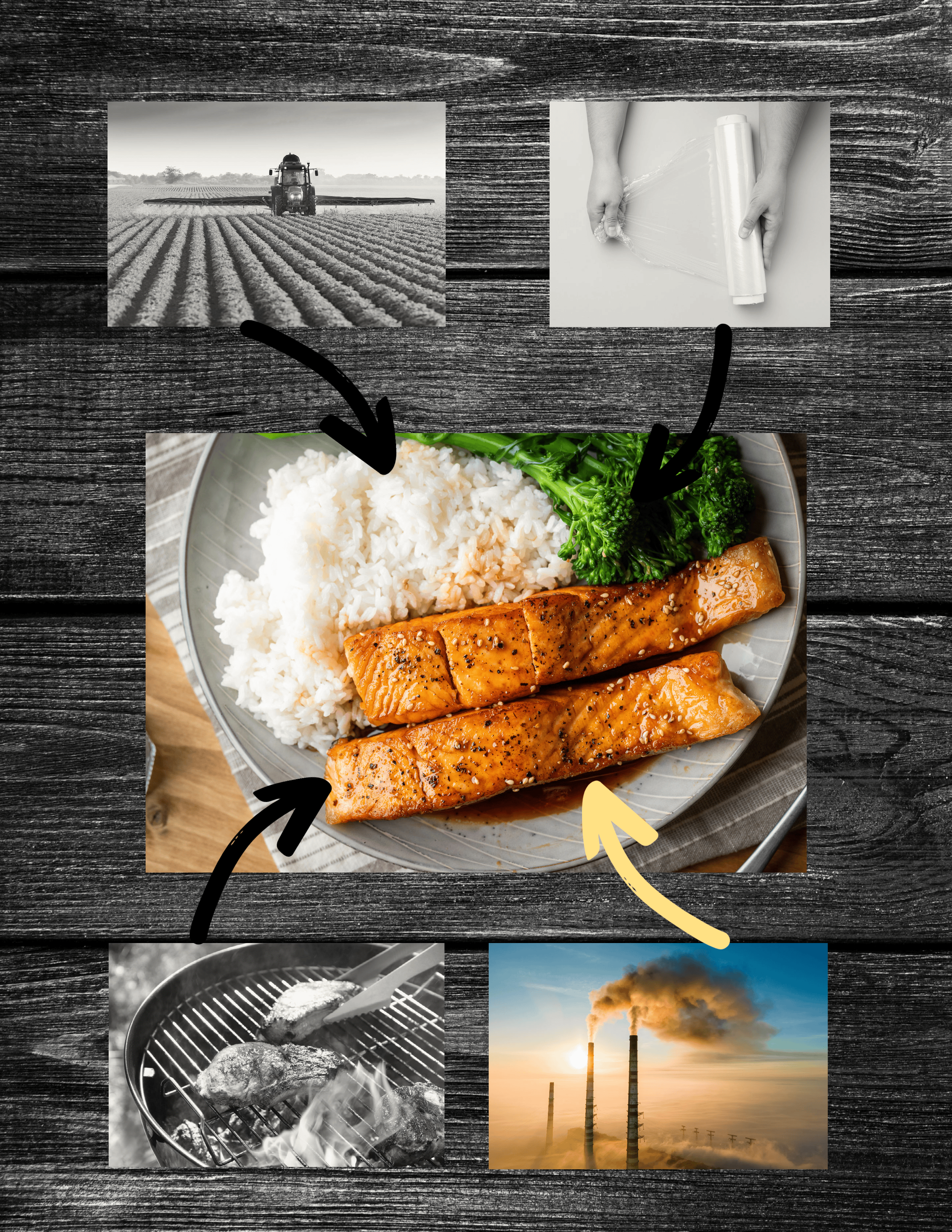
Sources of environmental contamination to our food include:
- Airborne pollution: industry, urban areas, heavily trafficked roads, busy diesel train routes, airports, or pesticide drift from agriculture, municipal (e.g. parks), or neighbors.
- Waterborne pollution: industrial or municipal discharges to streams and rivers, polluted groundwater, or irrigation water sourced from polluted waterways.
- Soil contamination: past or present industry, agriculture, or use of toxic building materials.
Sounds like we’re surrounded by a tangled web of toxic gunk, right? However, because some areas are less polluted than others, when you are able to choose food and water from cleaner areas, you can limit how much you’re exposed to. The cleanest areas are along west coasts of continents, e.g. where air currents have traveled farther across oceans and thus have cleared most of their contamination, as well as areas furthest from industrial sources, chemically intensive agriculture, and urban areas. You might be able to determine the locations of nearby industrial dischargers by searching for industry emissions in your state. For example, California has this resource.
It’s also easier to reduce exposure to some environmental contaminants by choosing certain foods over others. Fish, meat, and dairy, including butter, rank higher in concern because animals bioaccumulate (build up) fat-soluble contaminants like PCBs in their bodies at levels up to a million or more times than plants. These chemicals also take longer to clear from your body. You can reduce that exposure by removing fats from meat before you cook it and choose low- or nonfat dairy options.
Problem/solutions:
Drinking water: Very controllable
- Unless you live in a house or area with lead pipes or other serious contamination issues, it’s best to drink filtered tap water. Bottled water, especially those sold in plastic containers, is not ideal due to contamination by microplastics and other plastic-associated chemicals.
- Contact your local drinking water utility about water quality issues in your service area. If you’re on a well, you can have your water tested for chemicals like nitrates, heavy metals, and pesticides.
- Resource for choosing the best filtration methods: EWG guide.
Home gardens & foraging: Location is controllable, but important to know the history.
- Learning about the history of the land is key to avoiding environmental contaminants in food you grow and gather. Was it agricultural (might have arsenic if an orchard) or industrial?
- For more detailed information on potential sources of contaminants in gardens, check out this post.
- For more detailed information on potential sources of contaminants in foraged foods, check out this post.
Store-bought or farmers market produce and grains: Somewhat controllable.
- If your store or farmer’s market stocks produce from local farms that are not adjacent to industry, chemically intensive agriculture, or urban areas, the fruits and vegetables will likely be less contaminated by environmental pollution.
- To reduce arsenic in rice (particularly brown rice), which may be grown in contaminated water, either soak the rice for several hours and replace with fresh water prior to cooking or cook in excess water and dump excess.
Fish: Controllable with guidance; however, bioaccumulation increases risk.
- Because fish bioaccumulate fat-soluble contaminants, it’s critical to follow guidelines for choosing fish from less-contaminated waterways.
- Check these guides (NRDC, EDF) and research local fish advisories to make sure you are selecting fish from less contaminated waterways.
- For more detailed information on potential sources of contaminants in fish, check out this post.
Meat and dairy: Difficult to control and bioaccumulation increases risk.
- Unless you can find meat and dairy from animals raised along the west coast, as well as upwind of industry or urban areas, they are more likely to be contaminated by fat-soluble environmental contaminants.
- For more detailed information on potential sources of contaminants in meat and dairy, check out this post.
The best approach toward reducing our exposure to toxic environmental pollutants is to push our government to ban production of toxic chemicals. A recent study of several PFAS chemicals in seabirds’ eggs showed a significant drop thanks to regulations banning them. Shifting from toxic manufacturing to green chemistry would benefit us all.
For more information, you may follow me on social media (LaurelJStandley on Bluesky, Threads, and Instagram).
No part of this blog was generated using AI, nor is the content available for use by AI entities without prior approval and compensation.