
In Parts 1 and 2 (links below), I discussed the plastic-based chemicals and microplastics we’re exposed to and sources to our food and beverages. In this third post, I’ll discuss the following: (a) intervention studies that show measurable reductions in plastic-associated chemicals in participants; (b) what you can do to lower your exposure; and (c) resources where you can learn more.
Intervention studies demonstrate reductions work
While you may feel surrounded by plastic, taking steps to reduce exposure has been shown to help. Here’s a partial list of intervention studies that have shown significant reductions in urinary levels of plastic-based chemicals, a measure of body burden:
- In a 3-day dietary intervention that provided fresh foods for participants, levels of two plasticizers, BPA and DEHP, dropped by 66% and 53-56%, respectively, for participants who previously drank from plastic bottles, ate canned and packaged foods, dined outside the home, and ate meals microwaved in plastic.1
- The PERTH (Plastic Exposure Reduction Transforms Health) Trial2 studied the effect of four interventions compared to a control group on urinary levels of plastic-associated chemicals (PACs): Group 1 (low-PAC food); Group 2 (low-PAC food, utensils, and food prep practices); Group 3 (low-PAC personal care products); and Group 4 (all interventions). Urinary phthalate metabolites dropped anywhere from 32% to 60%. Bisphenol reductions ranged from no change for Group 3 up to 60%. Analysis of the results identified intake of highly processed and packaged foods as most responsible for higher urinary phthalates.
- A 50-day Buddhist “temple stay” involving a vegetarian diet resulted in reduced urinary phthalates, indicating that a vegetarian diet can contribute to lowering exposure.3 Note – the participants may also have been eating an unprocessed diet during their stay.
What to eat
- Home grown, raised, or caught foods contain the least plastic-based chemicals and particles.4 Packaged and ultra processed foods contain the most.5
- Cooking at home is a safer bet for lower exposure.6 Eating out the prior day was associated with 35% higher urine levels of phthalates, while eating cafeteria food resulted in 15 and 64% higher levels for children and adults, respectively.
- Consuming a plant-based diet is associated with lower levels of plastic contaminants than one high in meat and dairy, which showed two-fold higher phthalate levels.4,8 If you do choose a plant-based diet, note that tofu contained lower levels of microplastics than processed veggie “meats.”9
- While choosing organic may be a good way to reduce exposure to pesticides, it does not appear to be protective against plastics, both because organic foods may be processed and packaged and because plastic sheeting and other materials are allowed for use on organic crops.
What’s in your kitchen
Take a look around your kitchen and lay out all the plastic containers, dishes, cups, utensils, cutting boards, and bags. Those that probably contribute the most plastic-based chemicals and particles to your food are those you heat food in, abrade (cutting board, mix/whisk with/in), or store fatty or acidic foods in. There are many alternatives for those, including wood cutting boards and spoons, stainless steel utensils and bowls, Pyrex, glass jars (e.g. jam or canning), and glass baby bottles. Ceramic dishware and bowls are fine if they’re free of heavy metals (check out this post where I learned my favorite dishes were high in lead).
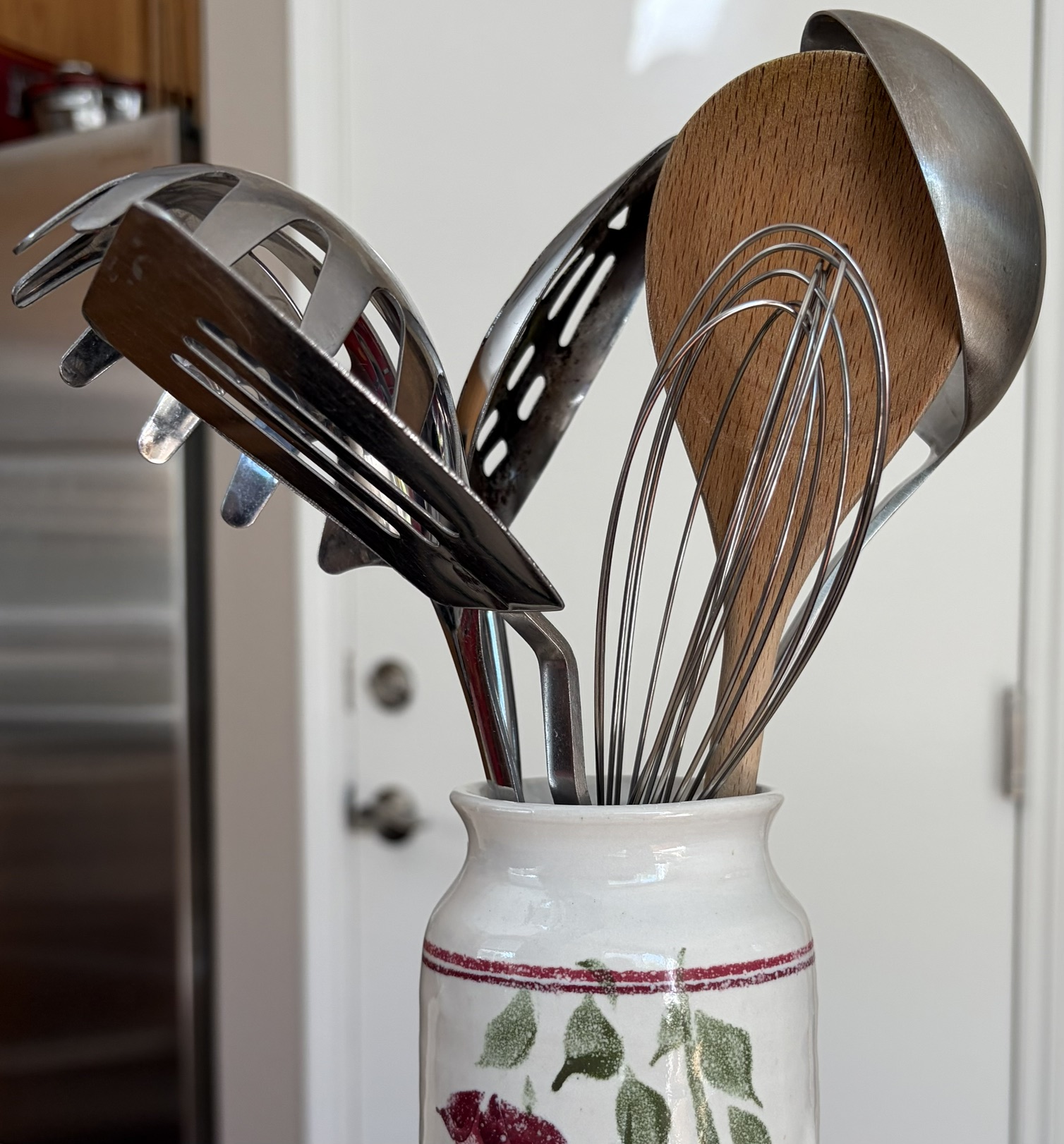
Silicone utensils and cookware might also be problematic. Though it’s been suggested as a safe replacement for plastic,10one study noted that it released microplastics, more so with extended use and age.7
Also take a close look at your small appliances. If your blender or processor vessel is plastic, consider replacing it with a glass or stainless-steel version, or mash/process your food using a stainless-steel potato masher or immersion hand mixer. Instead of brewing coffee in machines, make pour over coffee using unbleached paper or stainless-steel filters or use a plastic-free French press. For tea, skip the plastic tea bags and brew loose leaf tea using a stainless-steel infusion ball.
Skip nonstick pans unless they’re clearly labeled “PFAS-free,” meaning they are free of all fluorinated chemicals, not just PFOA and PFOS free, which are specific chemicals and may be replaced by equally problematic chemicals. Ceramic-coated pans are an option but make sure they’re guaranteed by the manufacturer to be free of heavy metals like lead. For cooking, try stainless steel and cast-iron pans, as well as Pyrex bowls and containers for heating in the microwave. Use glass or ceramic plates as covers for heating instead of plastic lids.
Don’t forget cleanup. There are sponges and brushes made from natural fibers rather than plastic that make better options. Look for natural materials like cellulose, cotton, agave and coconut fibers.
What about washing food to remove microplastics? Using a detergent was found to be ~7x more effective at removing microplastics from lettuce than simply washing with water.11 Washing bagged rice with water before cooking reduced plastics contamination by 20-40%.12 Washing meat and fish can also reduce microplastics but only after 3 minutes of rinsing; ten seconds wasn’t sufficient.7 This may be because meat has a higher fat content, which binds microplastics more strongly than nonfatty foods like rice.
I’ll be going into more detail about water filters for next month’s post, but a quick look at the literature indicated that the most effective way to remove microplastics was use of a membrane, e.g. ultrafiltration system. Because there are downsides to using those, check back next month for a clearer picture on what will work best for you.
Don’t fall for “natural”
When looking for better alternatives, note that “natural” or “plant-based” doesn’t always mean safe from contamination by plastics and other toxic chemicals. For example, one version of walnut scrubbers contained recycled plastic fibers as a binder.
Studies have confirmed the presence of hazardous substances in bio-based plastics, paper, and cardboard.13 Sources may include contaminated raw materials, production equipment, incorporation of plastics and their additives to coat surfaces, and pesticides from polluted soils. Because grease and fluids can soak through paper and plant-fiber containers, to-go coffee cups and paperboard food containers are often lined with plastic or contain PFAS.14,15 One note, products certified by the Biodegradable Packaging Institute after 2020 will require materials to contain <100 ppm fluorine so look for that certification.
Clearing this stuff from your body
Ultimately, your body burden of plastic chemicals and particles, and thus their impact on your health, is a balance between what you take in and what you’re able to metabolize and excrete. The good news is that chemicals like phthalates will clear from your body within days so your body burden will go down quickly if you reduce your exposure.
In contrast, it seems that particles, e.g. microplastics, are stickier, at least once they get into our organs. However, emerging research indicates that dietary fiber and fermented foods like Kimchi can help prevent uptake of microplastics from your gut and aid their removal through excretion.16,17 It may be too soon to know whether either fiber or fermented foods substantially lower the amount of micro- and nanoplastics in your organs but including more of them in your diet is beneficial to your health so it’s a good idea to include them anyway.
Bottom line: Key things to do to lower your exposure
- Eat mostly unprocessed, unpackaged foods and beverages.
- Eat less meat and dairy.
- Avoid using plastic and PFAS-based nonstick cookware, utensils, cutting boards, storage containers, and sponges. Use glass, stainless steel, wood, and low-lead ceramics, including stainless steel tea infusers instead.
- When dining out or getting coffee to go, bring your own stainless steel or glass containers and avoid places that serve in plastic or plastic-lined paperboard containers.
- Buy unpackaged produce and dry goods (legumes, rice, nuts), whenever possible, and bring your own cotton bags or use paper bags for produce or bulk items.
- Don’t be afraid to contact companies to ask what’s in a product.
Whatever you choose to do, be kind to yourself. I recommend tackling the big things first and perhaps one at a time. And because the biggest changes occur at the policy level, e.g. when toxic products or chemicals are banned or limited,18 it helps if you contact your state and national legislators and ask them to support bills limiting the production of toxic substances.
Helpful Resources
Dr. Shanna Swan has a list of resources that help you find plastic alternatives and information on health concerns associated with exposure to the toxic ingredients and particles in plastics. I also recommend following Anne Marie Bonneau, who broke up with plastic years ago and posts helpful advice as @ZeroWasteChef on social media and has an informative newsletter and cookbook.
No part of this blog was generated using AI, nor is the content available for use by AI entities without prior approval and compensation.
Parts 1 and 2 of this series can be found at these links:
References
- Rudel, R. A., et al. 2011. Food Packaging and Bisphenol A and Bis(2-Ethyhexyl Phthalate Exposure: Findings from a Dietary Intervention. Environ. Health Perspect. 119:914-920.
- Harray, A. J. et al. 2026. Low-plastic diet and urinary levels of plastic-associated phthalates and bisphenols: the randomized controlled PERTH Trial. Nature Medicine. 32:1871-1883.
- Ji, K. et al. 2010. Influence of a five-day vegetarian diet on urinary levels of antibiotics and phthalate metabolites: A pilot study with “Temple Stay” participants. Environ. Research. 110:375-382
- Pacyga, D. C. et al. 2019. Dietary Predictors of Phthalate and Bisphenol Exposures in Pregnant Women. Adv. Nutrition. 10:803-815
- Yates et al. 2024. A toxic relationship: ultra-processed foods & plastics. Global Health. Vol 20.
- Varshafsky, J. R. et al. 2018. Dietary sources of cumulative phthalates exposure among the U.S. general population in NHANES 2005-2014. Environ. Int. 115:417-429
- Hirschlag, A. and Henriques, M. 22 September 2025. Your kitchen is full of microplastics. Here’s how to eat less of them. BBC.
- Serrano, S. et al. 2014. Phthalates and diet: a review of the food monitoring and epidemiology data. Environ. Health.
- Milne, M. H. et al. 2024. Exposure of U.S. adults to microplastics from commonly consumed proteins. Environ. Pollut. 343: 123233.
- Yadav, H. et al. 2023. Cutting boards: an overlooked source of microplastics in human food? Environ. Sci. Technol. 57:8225-8235.
- He, D. et al. 2023. Optimize lettuce washing methods to reduce the risk of microplastics ingestion: The evidence from microplastics residues on the surface of lettuce leaves and in the lettuce washing wastewater. Sci. Total Environ. Vol 868.
- Dessi, C. et al. 2021. Plastics contamination of store-bought rice. J. Hazardous Materials. Vol 416.
- Wiesinger, H. 2024. Studies confirm hazardous substances in bio-based food contact materials. Food Packaging Forum.
- Goldberg Fox, E. 28 May 2019. Food packaging is full of toxic chemicals – here’s how it could affect your health. The Guardian.
- Fassler, J. 17 August 2019. Is your takeout lunch bowl covered in toxic ‘forever chemicals’? The Guardian.
- Wang, H. et al. 2024. Fighting microplastics: The role of dietary fibers in protecting health. Food Frontiers. 5:1984-1998.
- Lee, J. et al. 2026. Efficient biosorption of nanoplastics by food-derived lactic acid bacterium. Bioresource Technology. Vol. 447.
- Sieck, N. E. et al. 2024. Effects of Behavioral, Clinical, and Policy Interventions in Reducing Human Exposure to Bisphenols and Phthalates: A Scoping Review. Environ. Health Perspect. Vol. 132.
2 responses to “A plateful of plastic? Sources of plastic in our diet – Part 3 of 3”
Thanks for this, Laurel! Great info – and now I’ve got my work cut out for me!
Thanks! There is so much but a few changes can make a difference.